At Clearview Renovations, we speak with Sydney homeowners every week who want their living spaces to feel new again without a full rebuild. The right interior upgrades can transform how a home looks, feels and functions, adding comfort today and value down the track. This guide walks through the changes worth making first, from kitchens to lighting to sustainable finishes.
Key Takeaways
- Kitchens and bathrooms still deliver the strongest return on any interior upgrade.
- Small changes like lighting and tapware can modernise a room without a full renovation.
- Sustainable choices lower running costs and appeal to today’s buyers.
- Good layout planning matters more than chasing trends.
- Working with an experienced team keeps upgrades on budget and on time.
Why Interior Upgrades Matter More Than Ever
Sydney’s property market keeps rewarding homes that feel considered and current. Renovation market insights show that established homes with recent updates continue to draw stronger buyer interest than properties needing extensive work. Similar housing trends point to buyers increasingly judging a home on how welcoming and practical it feels rather than on floor size alone. For homeowners planning to stay put, the same upgrades that attract buyers also make daily life more enjoyable. A well-planned interior upgrade also spreads its benefit across the whole household, from easier cleaning and better storage through to a home that simply feels calmer to live in day to day.
Kitchens: The Heart of a Modern Upgrade
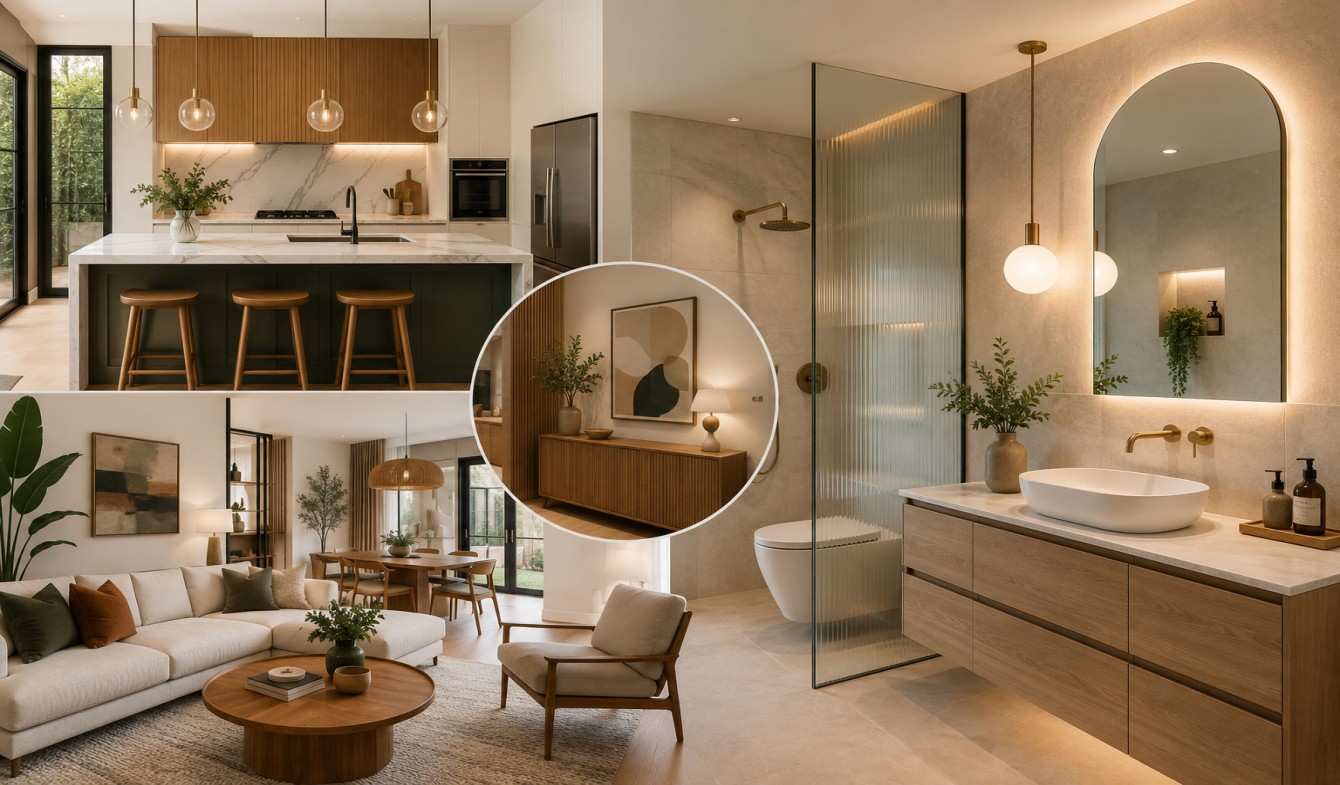
A kitchen upgrade does not need to mean gutting the whole room. Stone benchtops, updated cabinetry fronts, and better lighting can lift the entire space within a modest budget. The latest kitchen design trends highlight timber tones, oversized islands and stone benchtops as the features Australian homeowners are requesting most this year. If your kitchen already has good bones, kitchen renovation specialists can often refresh the benchtop and hardware alone to shift the whole feel of the room.
- Replace laminate benchtops with stone or engineered surfaces
- Swap dated cabinet fronts and handles for a cleaner profile
- Add task lighting under overhead cabinets
- Introduce a butler’s pantry where space allows
Bathrooms: Small Changes, Big Impact
Bathrooms are just as influential and often need less structural work than owners expect. Choosing the right bathroom tiles plays an important role in improving safety, durability and long-term performance, making it a decision worth getting right the first time. Current bathroom design trends show how floating vanities, fluted glass, and warm lighting are replacing the all-white bathrooms of a decade ago.
- Wall hung vanities to free up floor space
- Large format tiles for fewer grout lines
- Warm, dimmable lighting instead of a single overhead globe
- Fluted or textured glass for privacy without losing light
Sustainable and Energy Smart Choices
Sustainability has moved from a nice to have to a genuine selling point. Sustainable home renovations often include sealing, insulation, and glazing upgrades that reduce heating and cooling costs significantly, often for a modest outlay during a renovation. Research has spent years documenting how these same measures also improve comfort and indoor air quality for the people living in the home. Renovation guidance takes this further, offering room-by-room recommendations on lower-impact materials for anyone renovating a kitchen, bathroom, or living space. CSIRO’s retrofitting research found that even older homes can reach a healthier, more efficient standard once insulation and sealing are addressed properly during a renovation.
- Draught seal doors and windows while walls are open
- Choose LED lighting throughout
- Add or top up insulation during any wall or ceiling work
- Select water efficient tapware and fixtures
Lighting, Layout and Living Spaces
Layout decisions influence a home far longer than any single finish. Construction industry analysis notes that Sydney’s renovation sector has stayed active even as new home building slows, a sign that homeowners are choosing to reshape existing houses rather than move. Modern kitchen colour combinations that transform interiors show how colour choices can open up a room or make a small space feel considered rather than cramped, without any structural changes at all. Storage is another quiet influence on how a home feels day to day. Built-in joinery, deeper drawers and a dedicated spot for everyday items reduce clutter and make rooms feel larger, even when the footprint has not changed at all.
Working With the Right Team
The upgrades above only deliver their full value when they are planned and sequenced well. Trades need to work in the right order, materials need to arrive on time, and every detail needs checking before the next stage begins. A clear plan, honest communication and steady project management turn a list of ideas into a finished home you are proud of. Our team manages this process from the first design conversation through to the final walkthrough, so you are never left guessing what happens next or chasing trades yourself.
Conclusion
Modernising your home does not have to happen all at once. Whether you are planning a full renovation or a handful of targeted upgrades, getting the sequence and detail right makes all the difference. The team at Clearview Renovations has guided Sydney homeowners through kitchen, bathroom and whole home projects for years. Contact us today to talk through your ideas and get a clear, honest plan for your home.
FAQs
What is the most cost effective interior upgrade?
Updating lighting, tapware and cabinet hardware usually gives the biggest visual change for the smallest budget in any home.
How long does a kitchen upgrade take?
A cosmetic kitchen refresh can take one to two weeks, while a full renovation usually takes six to eight weeks.
Do I need council approval for interior renovations?
Most cosmetic upgrades do not need approval, but structural changes or moved plumbing usually require council sign off first.
Which rooms add the most value when upgraded?
Kitchens and bathrooms consistently deliver the strongest return, followed by improved lighting, storage and overall living area flow.
Are sustainable upgrades worth the extra cost?
Yes, insulation, sealing and efficient fixtures usually pay for themselves through lower energy bills within a few years.
How do I start planning an interior upgrade?
Book a consultation with a trusted renovation team to discuss your goals, budget and realistic timeframe before starting.